
A message that fits
Start with the need that brought this visitor here.
 First visit
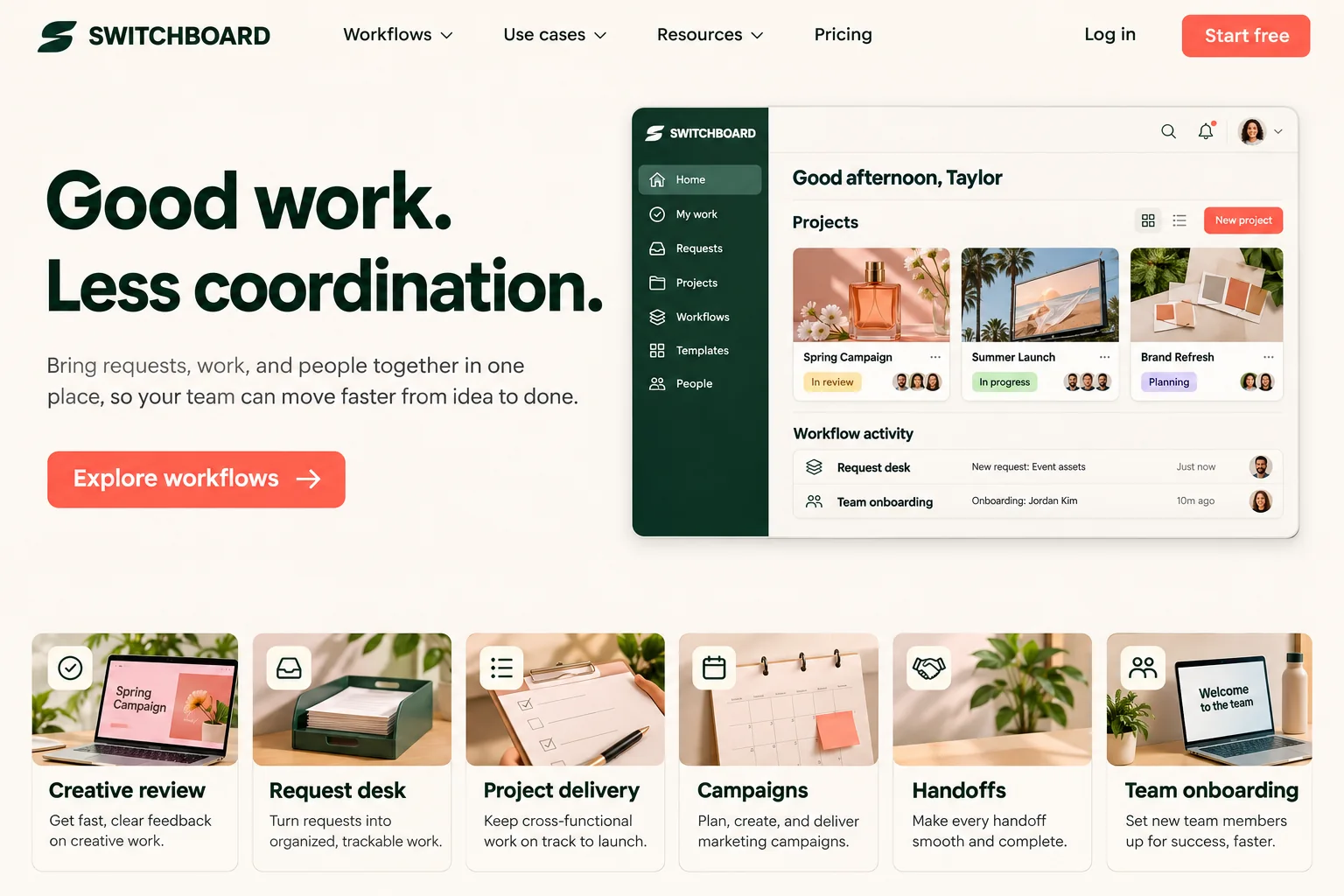
Good work. Less coordination.
 Return visit
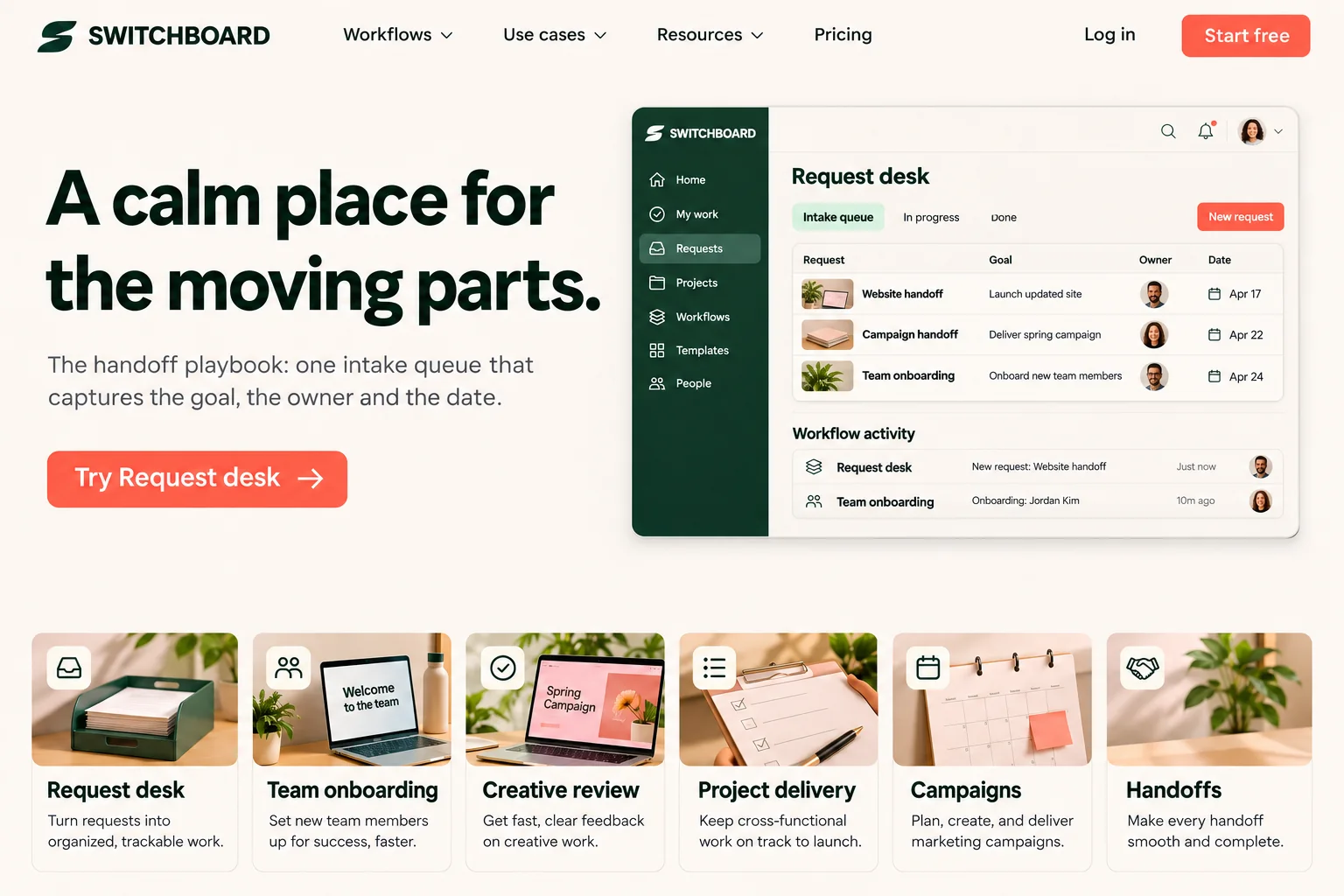
A calm place for the moving parts.
Dynamite remembers what each visitor looked at, so when they come back the page picks up where they left off.
On a first visit someone reads the Switchboard homepage, then the pages for two operations workflows, Request desk and Team onboarding. The next time that browser opens the homepage, the hero is about operations and points at the handoff playbook.
Dynamite decides what each visitor sees from how they arrived, what they do on your site, and the data you connect.
First visit
<script defer src="https://www.usedynamite.com/dynamite.js" data-site="your-site"></script> Shopify
 Webflow
 Framer
 WordPress
 Squarespace
 Wix
 Next.js
Dynamite can be driven entirely over MCP, so your agents create, manage, and optimize personalization themselves.
 Claude
 OpenAI
Dynamite reviews performance across all variants and personas, so each iteration gets better.
Dynamite doesn't generate new designs on the fly. You configure the possible designs on our dashboard, along with who they are for.
Illustrative example: Switchboard. Generated design preview.
Start with the need that brought this visitor here.
First visitGood work. Less coordination.
Return visitA calm place for the moving parts.
Put the product, workflow or story they care about in view.
First visitAll six workflows, from Creative review to Team onboarding
Return visitThe handoff playbook: one intake queue that captures the goal, the owner and the date
Choose the action that fits this visit. Measure next-step completion against the original.
First visitExplore workflows
Return visitTry Request desk
Help each visitor find their starting point in the same site.
First visitAll six workflows, from Creative review to Team onboarding
Return visitThe handoff playbook: one intake queue that captures the goal, the owner and the date
Visit count, pages read with recency and time spent, goals reached, and the campaign a landing URL named. It lives in the visitor’s browser for your site only and expires.
No, only that this browser has been here before. Customer status has to come from your own system through a data connector you host.
The visitor starts fresh, because nothing is shared between devices or browsers.
Any website whose visitors arrive wanting different things: online stores, SaaS and B2B sites, and publishers.
No. It works with any website out of the box.
You should be implemented in a day and start seeing results within a week.
Yes. Every account starts with an onboarding call, and we help you set up your first personalizations.
We take you through setup on your onboarding call and share what works for sites like yours. Dynamite also bootstraps the first setup itself.
Dynamite can bootstrap the implementation and drive itself. The more data you give it, the better it gets. If you want to hold control over exactly what is shown and when, you can. Otherwise, the agents are good at it.
No. Dynamite runs at runtime, after your page has painted.
In a cookie in the visitor's browser, backed up and enriched on a server.
Dynamite can be pointed at any component or control to replace sections, add new ones, reorder, filter, and more.
Dynamite caches variants, so the decision engine can render new content within 300 ms.